Whoever learn Vietnamese would agree that this is a fascinating language. It is captivating and intricate. The language embodies the country’s history, culture, and identity. The language has a long history of creation, modification, and adaptation. It contains cultural and linguistic values. These values capture the attention of researchers. They also attract people who fell in love with the country.
Table of Contents
Overview
Vietnamese is the national and official language of Vietnam. Vietnamese is rooted in the Austroasiatic language family. It has evolved over centuries. It has been heavily influenced by Chinese, French, and other regional languages. Its distinctive tonal nature sets it apart, with six different tones determining the meaning of words. A change in tone can completely alter the significance of a word. Pronunciation is a critical aspect of mastering the Vietnamese language. Therefore, when you learn Vietnamese, especially if you are foreigners, it is always a huge challenge.
Main characteristics of the Vietnamese language
If you start to learn Vietnamese, make sure you keep in mind these notable features. These features are critical to understand the principle of this fascinating language.
- The Vietnamese alphabet is Latin-based, which means you will find it pretty similar to the English alphabet or other Roman alphabetic systems. Twenty-two letters come from the Roman alphabet (minus f, j, w, and z). Seven letters have been modified: ă, â, đ, ê, ô, ơ, and ư. As in English, the order follows the Roman alphabetic convention. Letters with diacritical marks come after letters without. You can learn Vietnamese vowels with their diacritical marks here.
- Vietnamese is a tonal language. Its words are written with diacritics, or accent marks. There are 6 tones, making the same underlying letters with different diacritics to have different pronunciation and meaning. This is why when you learn Vietnamese, pronunciation and listening are always the most challenging aspects.
- Vietnamese borrows words from Chinese and French. Vietnam was many times and for long periods dominated by the Chinese during the previous millennium. It was a French colony for almost a hundred years (1985 – 1954). For example, some of the words transliterated from French are va li. This comes from the French word valise, meaning suitcase. Another example is pho mát. This comes from the French word fromage, meaning cheese.
- Vietnamese has three main dialects, including the Northern, Central and Southern. This might be a concern to some when they learn Vietnamese, as they might think the difference could be as big as Chinese dialects such as Mandarin, Cantonese and Hokkien. On the contrary, you can actually understand all three dialects of Vietnamese, as they only minorly differ in the pronunciation and some word usages.
Writing system of the Vietnamese language
Vietnamese writing has transformed through three prominent stages, along with the historical period of being dominated and colonized by other nations.
Before 13th century
The Vietnamese existed in spoken form, while its writing was classical Chinese, called Chữ Nho, as the country was under Chinese domination for over 1000 years.
From the 13th to 17th century
This is when Vietnamese started to transform, with the introduction of Chữ Nôm. Initially borrowing Chinese characters, it evolved into a modified script using a blend of Chinese characters and indigenous Vietnamese characters. However, it doesn’t mean that Chữ Nôm was intelligible to Chinese people. The widespread of this writing was made thanks to literature and poetry, including the renowned masterpiece The Tale of Kieu by poet Nguyen Du. Despite having a great adoption, Chữ Nôm was unable to make its way to become the official language of Vietnam during this period, leaving classical Chinese the official writing script.

From the 17th century to now
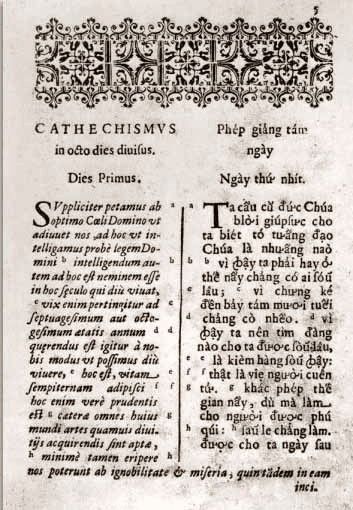
During this time, Catholic missionaries came to Vietnam and started to romanize Vietnamese language, combining elements of Portuguese, Italian, ancient Greek, etc., which produced the Romanized writing system called Chữ Quốc ngữ, meaning National Language. Only until the 19th century did the French colonial government pushed the language to replace Chữ Nôm with Chữ Quốc ngữ. In the beginning of the 20th century, Chữ Quốc ngữ became the official writing script of Vietnamese language. Therefore, if you learn Vietnamese, it might be less intimidating for you knowing that you study the popular Latin letters.
Cultural and artistic values
One of the most intriguing aspects of the Vietnamese language is its depth of expression. Vietnamese is rich in proverbs, idiomatic expressions, and poetic phrases that reflect the values, beliefs, and traditions of its people. These linguistic nuances often convey cultural wisdom, humor, and a profound understanding of life.
When you learn Vietnamese, you learn the culture and manner too. Family values are deeply ingrained in Vietnamese culture, and the language beautifully reflects this. Different words exist to address family members based on their age, gender, and relation. This emphasizes the importance of familial hierarchy and respect. This intricate system adds layers of warmth and intimacy to communication within families.
If you learn Vietnamese, you also find a gateway to understanding Vietnam’s artistic heritage. Traditional music, such as Ca Tru and Quan Ho, incorporates lyrical elements from ancient Vietnamese poetry. This highlights the poetic essence deeply embedded in the language.
As Vietnam positions itself on the global stage, the importance of the Vietnamese language cannot be overstated. It serves as a vessel carrying the country’s history, values, and aspirations into the future. It also fosters connections between people across diverse cultures and backgrounds.
In conclusion, this language is a treasure trove of history, culture, and linguistic intricacies. Its tonal melodies, vibrant expressions, and cultural depth make it a language worth exploring. It is valuable not just for communication but for understanding the soul of Vietnam itself. As the world embraces diversity, the beauty and richness of the Vietnamese language captivate learners. They also inspire enthusiasts worldwide.
If you are looking for a place to learn Vietnamese, consider Let’s Speak Vietnamese
- Our lessons are designed to help you learn Vietnamese quickly and efficiently.
- Our experienced teachers work with you to create a customized learning plan that meets your specific needs and goals.
- Our timetables are flexible. They can be tailored to your schedule. This makes it easy to fit language learning into your busy life.
- You can find Vietnamese language courses online or in person, one-on-one or in group.